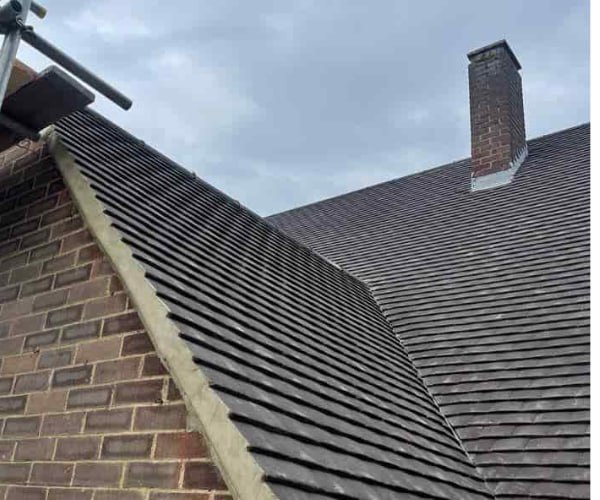
Can Slipped Tiles Damage Nearby Tiles or the Roof Structure?
Slipped roof tiles are often seen as a minor issue, but in reality, they can lead to far more serious problems if left unresolved. What starts as a single displaced tile can quickly affect neighbouring tiles and, in some cases, the underlying roof structure itself.
For homeowners in Brixworth, understanding the wider impact of slipped tiles is essential for protecting the long-term condition of the roof. At NGF Roofing Brixworth, inspections frequently reveal that early tile movement has already caused hidden damage elsewhere on the roof.
How Slipped Tiles Affect Surrounding Tiles
Roof tiles work as a connected system, with each tile supporting and overlapping the next. When one tile slips, it disrupts this balance. The surrounding tiles may lose support, allowing them to shift, crack, or lift during wind or heavy rain.
Over time, repeated movement places stress on fixings and overlaps, increasing the likelihood of further tiles becoming loose. This can quickly turn a small, localised issue into a wider roof problem.
Increased Risk of Water Penetration
A slipped tile often creates a direct pathway for water to reach the roof’s underlayers. Once moisture gets beneath the surface, it does not stay in one place. Water can track along underlay and timbers, soaking areas well beyond the original slipped tile.
This hidden moisture can weaken timber components and reduce the effectiveness of insulation, even before visible signs appear inside the property.
Damage to Roof Battens and Fixings
When tiles move out of position, they can place uneven pressure on roof battens. Over time, this can cause battens to crack, rot, or pull away from their fixings. Once battens are compromised, tiles no longer sit securely, increasing the risk of further movement and damage.
This type of deterioration often remains unseen until a professional inspection is carried out.
Structural Stress During High Winds
Loose or slipped tiles are more likely to shift further during windy conditions. As tiles lift and drop back into place, they can strike neighbouring tiles, leading to chips or fractures. In stronger winds, tiles may dislodge completely, exposing larger areas of the roof to the elements.
Repeated movement also increases stress on the roof structure below, particularly along ridges and edges.
Why Early Professional Attention Matters
Slipped tiles rarely correct themselves. Addressing the issue early allows roofers to secure the affected area, check surrounding tiles, and assess whether any underlying damage has occurred.
NGF Roofing Brixworth provides thorough roof inspections in Brixworth, Northamptonshire, ensuring that slipped tiles are dealt with properly before they lead to more extensive roof or structural issues.
Conclusion
Yes, slipped tiles can damage nearby tiles and, if ignored, may even compromise parts of the roof structure. What appears to be a small problem on the surface can quickly escalate through water ingress, structural stress, and ongoing tile movement.
For homeowners in Brixworth, Northamptonshire, timely attention from NGF Roofing Brixworth helps prevent minor tile issues from developing into larger, more disruptive roofing problems. If you suspect slipped tiles on your roof, a professional assessment is the safest way to protect your home.
Call us on: 01604 279 696
Click here to find out more about NGF Roofing Brixworth
Click here to complete our contact form and see how we can help with your roofing needs.